What Evolved Women Want
Can he change? Can he actually be different, or am I wasting my time waiting for a man who will never exist?
Only one in five women who contact us says she knows he’s looking for an answer and wants to work on changing. That leaves 80% of women wondering.
What I Discovered…
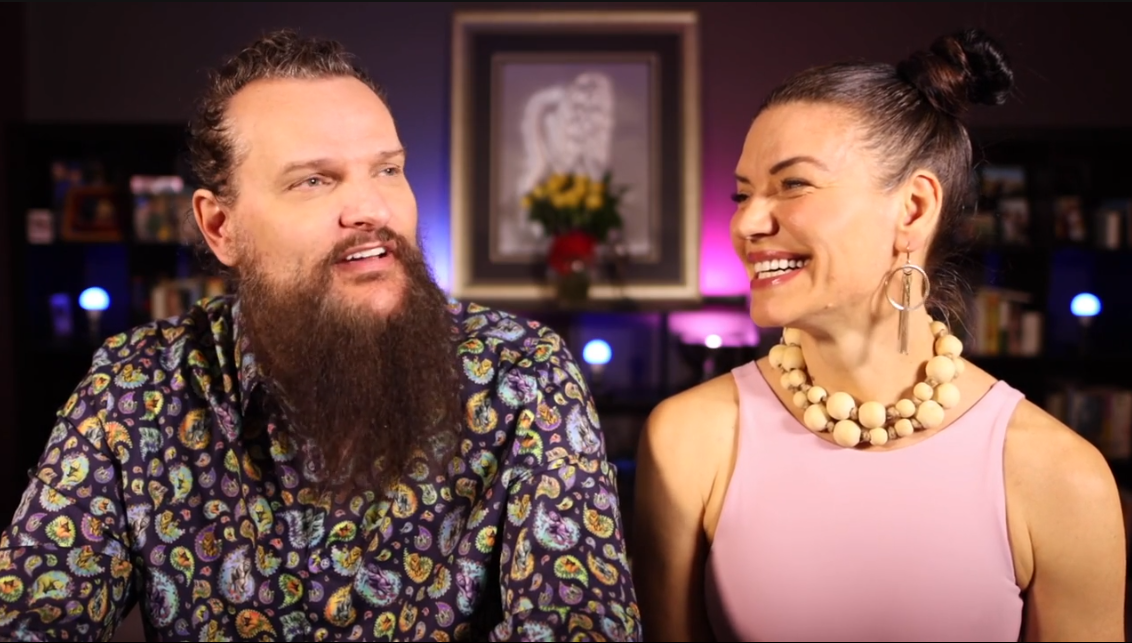
I could see the good man inside Graham when we first met, but that got harder and harder to connect with the longer we were together, and the more reactive he got when I tried to tell him what I need.
The more I would try to explain what I needed from him, the more frustrated and upset he would get. The man I fell in love with was becoming the least safe person in my life.
But I discovered something that got him to hear me without turning me into the enemy. I stopped trying to force him to listen and learned how to activate his own desire to hear what I had to say.
He began seeing what his reactions were costing us. He started to become emotionally safer because it connected with the man he wanted to be.
He took responsibility because the "math" worked for him, rather than because I won the argument.
It turned out to be surprisingly simple to change the entire direction of our relationship.
You can use this exact method with your man because on this, men are all the same.
What the right approach catalyzes in a man
- His drive to feel competent.
- His instinct to protect something valuable.
- His need to respect himself.
- His masculine impulse to solve a clearly defined problem.
- His determined drive toward a path that produces visible progress.
- His need to feel that he is choosing rather than surrendering.
- His resolve to become stronger rather than be treated as broken.
- His hunger to earn her admiration again.
- His drive to succeed with her rather than constantly fail some invisible test.
- His determination to become the man he once promised himself he would be.
SO Much Easier Than What I Was Doing — and I Ended Up With A Dream Relationship
There is one very simple thing you can do that requires far less energy than everything you have already done.
You don't need to explain your pain more clearly. He knows you are unhappy. More explaining usually gives him more material to debate, defend against, minimize, or promise to fix later.
You can stop trying to explain what he needs to change. I found a way to make Graham recognize the problem himself and take ownership to grow.
His defensiveness disappears when he can think about what you need instead of how he’s failing you. His entire system experiences your pain as proof that he is failing, then shuts down because it kills him to feel like your pain is because of him.
You can stop trying to find the perfect therapist, podcast, book, video, or paragraph that will magically explain you to him.
You will know within 90 days whether he is truly capable of taking responsibility or if he'll only ever make promises when he's scared of losing you.
“I’m only going to ask you to watch me. I’m not going to promise you things will change. I know what I’m committed to. You'll know without a doubt that things will be different going forward,” Graham said.
- No more hanging your hopes on his “potential” and good intentions.
- No more action only when he’s scared you’re going to leave.
You will have a specific timeline of knowing what you should see — and it will be so obvious that everyone who knows him will experience a different man in just 90 days.
In the rare case that he's a man in the 1% who is truly unreachable, you can leave with the full awareness that there was nothing more you could have done.
Take Me To Jenn’s Offers
What you’ll have power over in your relationship
- Whether a conversation ever becomes a fight again.
- How to have your needs met instead of being told you expect too much.
- The secret to inspiring a man to not just meet but exceed your requests.
- How quickly the transformation happens.
- Promises ending and becoming consistent, trusted experiences.
- Genuine change instead of temporary compliance.
- An end to waiting for him to decide whether he’ll become her safe space.
In 90 days, you will have discovered the power you have to catalyze the magnificence in your man.
This Is An End To...
- Pleading for change.
- Wondering if change is just a short-term performance.
- The feeling of having no control over what you want in a relationship.
Why You’ve Endured
- At least some part of you still loves him, or loves who he once was, or who you believed he could be.
- He is a decent human being outside the uncomfortable moments.
- Your lives are too intertwined.
- You have children whose entire world would change.
- You can’t afford to leave.
- You have too much invested to leave without knowing whether the relationship is genuinely finished.
- He improves whenever he thinks he’s pushed you past your limit, or you walk out the door.
- The relationship still feels loving, sexual, playful, or deeply connected between the painful cycles.
- You’re exhausted, yet you have enough hope for one last honest attempt.

A way to know if he can change
A method with a deadline, and knowing exactly what to look for — something that shows up consistently and improves over time. You stop trying to do the work for him. No more threats, repeated conversations or emotional collapse.
In 90 days you’ll know if you’ve saved your marriage, your family and your future. And if not, you’ve saved five years of stress and promises.
Whether or not the relationship survives, you’ll have a skill set that attracts the kind of man you want to have a life with — because frankly, it’s not just men who don’t measure up to what the other gender expects today.
What You Think Should Motivate Him Is Pushing Him Away
The worst things a woman can do when a relationship isn’t working are the things she instinctively reaches for.
When a woman stops feeling safe, her instinct is usually to do more and keep trying over and over to explain it to him:
Talk more. Explain harder. Pursue him. Monitor him. Correct him. Force clarity. Demand reassurance. Make him understand how serious it is.
It makes perfect sense inside her nervous system:
But to him, that increased effort often feels like:

10 Things Women Do That Sabotage Safety
01Chasing him when you feel him pulling away
You text him again. You ask him what’s wrong. You try to reconnect the way women instinctively do with friends. You watch his mood, react to every shift in his energy and over-analyze everything he says.
To you it feels like you’re fighting for the relationship. But to him it feels like he’s suddenly responsible for holding your whole emotional world together at the exact moment he’s already struggling hardest to manage his own.
The more you push him, the more pressure he feels to give you an answer, reassurance or emotional capacity he doesn’t know the answer to yet.
Instead of helping, your approach makes him feel less of a man — so he pulls back further, disconnects more often to protect himself, or dissociates until your emotional intensity has passed.
What made Graham lean in was when I was able to calm the urgency inside of me and simply gave him a feminine invitation to reconnect in the way men are instinctively drawn to.
I gave him space because it’s what men need to process and recharge their testosterone, and he showed up without pressure to wrap his arms around me and ask, “What do you need to feel safe right now?”
I stopped stewing and running through all the reasons I was hurt and he was responsible. And if I couldn’t believe the best about him, I found something constructive to distract me while he was going through his process.
We say we want our man to change, but then refuse to allow him the masculine process that’s required for that change to naturally occur.
02Explaining the same pain more than once
You explain it again. You give him another example. You go back through the history, connect it to every other time it happened and try to find the exact words that will finally make him understand how deeply you’ve been hurt.
To you, it feels like you’re helping him see the whole picture. But to him, the problem keeps getting bigger every time he thinks he’s finally understood what you need him to address.
The more layers you add, the more convinced he becomes that there’s no right answer, no finish line, and nothing he can say that won’t open another part of the conversation he’s already failing.
He doesn’t just become overwhelmed by your feelings. He feels defeated by his inability to hold them, fix the problem, or successfully care for the woman he loves.
What changed everything for Graham was when I stopped giving him six hours of emotional history and learned to bring him the cleanest truth at the centre of what I was feeling.
I gave myself time to work through the first waves of hurt, anger and fear so I could come to him with:
“This is what happened. This is what it created inside me. This is what I need to feel safe moving forward.”
That gave him something clear he could understand, respond to and actually do something about. I didn’t make my feelings smaller. I stopped burying the most important truth underneath so many layers that neither of us could find it anymore.
We believe that explaining more will finally make him understand. But the more emotional information we give a man, the less capable he feels of finding the one thing we actually need him to hear.
03Tightening around the outcome
You demand an answer now.
Are you committed? Are you going to change? Do you understand? Can I trust you? Can you promise me this will never happen again?
To you, it feels like you’re asking for the certainty you need to finally relax. But to him, it feels like he has to come up with the right answer on the spot before he’s had time to understand what he feels — so to keep you happy he makes promises he can’t keep.
The more frightened you become, the harder you push. The more tightly you hold on, the more pressure he feels to agree with you or make promises he hasn’t had time to fully choose for himself.
Instead of creating safety, the pressure makes him feel cornered. He either tells you what you need to hear so the intensity will stop, shuts down because he doesn’t know how to answer, or pulls away to reclaim the freedom to figure out what he actually wants.
What made Graham feel safe enough to consider what more he could give was when I stopped trying to control the answer and became completely clear about what I required in a relationship. I told him:
“This is what I need to feel safe and fulfilled in a relationship. I don’t know yet whether you can or want to create that with me, but that’s what I need to feel safe with a partner.”
I didn’t lower my standards. I stopped trying to force him to meet them before he had consciously chosen to. That gave me something far more valuable than reassurance when I was feeling desperate. It gave me the opportunity to watch what he freely chose, and to know he was freely choosing me.
We believe certainty will make us feel safe. But the harder we push a man to promise an outcome, the less we know whether we’re hearing his truth or the answer he needs to give us just to make the pressure stop.
04Making him responsible for resolving every feeling
You need him to listen, reassure you, explain himself, apologize, stay present, help you process everything you’re feeling and make the pain go away.
To you, it feels like you’re asking him to repair the hurt his behaviour caused. But to him, it feels like he has to hold himself together and somehow make you okay at the same time.
The longer the conversation continues, the more responsible he feels for every new feeling that comes up. He starts believing there’s no point where he’ll have listened enough, apologized enough, or said the right thing to bring the two of you back together.
Instead of helping him understand your pain, the pressure makes him feel incapable of ever making you happy. He stops listening for what you truly need and starts searching for the answer that will finally make the conversation end.
What made Graham capable of remaining present with my feelings was when I learned to process the parts that belonged to me before bringing him the part that belonged to us. I could tell him:
“I’ve worked through the big parts of my feelings. I’m safe to have a conversation because I can tell you what I need rather than what I feel.”
That made it easy for him to acknowledge what happened, understand the impact and take responsibility for his part. I stopped expecting him to carry every fear, memory and feeling the experience had activated inside me. That gave him the emotional space to hear what I actually needed from him instead of feeling responsible for making every painful feeling inside me disappear.
We believe that if his behaviour activated the pain, he should help us process all of it. But the more responsibility we give him for completing our entire emotional cycle, the less capable he feels of hearing and repairing the part that truly belongs to him.
05Deciding what his behaviour means
You tell him:
“You don’t care!” “You’re selfish!” “You’re avoidant!” “You’re emotionally unavailable!” “You only think about yourself!” “You’re just like your father!” “You don’t want to grow!”
To you, it feels like you’re naming the truth of what his behaviour has shown you. But to him, it feels like you’ve already decided who he is and now expect him to confess to an identity he doesn’t recognize.
The more certain you become about what his behaviour means, the less room he has to help you understand what was actually happening inside him.
Instead of helping him see how deeply his behaviour affected you, your conclusions force him to defend his character. He stops listening to your experience and starts defending the fact that he isn’t the man you’ve accused him of being.
What made Graham willing to tell me the truth was when I learned to separate what I experienced from what I assumed his behaviour meant. I could tell him:
“When this happens, I experience you as not caring about me. Help me understand what’s happening inside you.”
That allowed me to be completely honest about the impact without telling him who he was, what he felt, or why he did it. It gave him room to look inside himself, tell me something I didn’t already know, and take responsibility for the impact without first having to defend himself against my explanation.
We believe that telling him exactly what his behaviour means will force him to see the truth. But the more we define his character for him, the less capable he becomes of hearing our experience and revealing the truth we actually need to understand.
06Creating a drama to force a conversation
You provoke a fight. You threaten the relationship. You pack a bag, become completely cold, or announce that you’re done.
To you, it feels like you’re finally making him understand how serious the situation has become. But to him, it feels like he has to believe the relationship is ending before you’ll let him get close enough to repair it.
You’re not consciously trying to manipulate him. You’re trying to create enough urgency for him to finally respond to what has felt urgent inside you for months.
The crisis gets his immediate attention, but it teaches him that emotional closeness only happens when the relationship is on fire. Instead of learning how to move toward you, he learns to wait until everything becomes catastrophic before taking action.
What made Graham understand the seriousness of what I was feeling was when I stopped performing the emergency and learned to calmly tell him the truth. I could tell him:
“I love you, and this is serious enough that I can’t continue if it doesn’t change. I’m not leaving today, but I need you to understand that when I feel like this my nervous system is wrecked and I start looking at apartments.”
That allowed him to hear the urgency without having to first manage an explosion, defend himself against a threat, or desperately promise whatever would stop me from leaving. It gave him the space to choose what he was willing to do because he understood what was at stake, not because I’d created a crisis he needed to survive.
We believe we have to create an emergency before a man will understand how serious the problem is. But the more often we use catastrophe to force connection, the more we teach him to ignore our pain until the relationship is already falling apart.
07Treating his intentions as irrelevant or untrustworthy
You may have excellent reasons not to trust him. But every time he makes an imperfect attempt, you tell him:
“You knew exactly what you were doing!” “You only changed because I threatened to leave!” “You’re manipulating me!” “You don’t actually mean any of this!”
To you, it feels like you’re protecting yourself from being fooled again. But to him, it feels like there’s nothing he can do that will ever allow you to see him as a good man who genuinely wants to make things better.
When every mistake proves that his intentions are bad and every improvement is dismissed as manipulation, there’s no path available for him to begin rebuilding trust with you.
Instead of inspiring him to keep showing you who he wants to be, you make him feel like you’ve already decided who he is. He either gives up, becomes defensive, or starts hiding his intentions because sharing them only gives you something else to question.
What made Graham want to keep showing me more was when I learned to separate his intentions, the impact of his behaviour, and the evidence I still needed to feel safe. I could tell him:
“I believe you genuinely want this to be different. What happened still hurt me, and I’m going to rebuild my trust based on what you consistently show me next.”
That allowed me to acknowledge the goodness I could still see in him without pretending the damage was repaired or handing him trust he hadn’t earned yet. It gave him a reason to keep showing up because his effort mattered, while giving me the freedom to believe in his heart and still let his behaviour prove whether that belief was safe.
We believe doubting his intentions protects us from being hurt again. But when we treat every mistake as proof that he’s bad and every improvement as manipulation, we remove the very path he needs to show us that he’s becoming someone we can trust.
08Becoming his mother, therapist and relationship project manager
- You find the resources.
- You schedule the counselling.
- You explain what the therapist meant.
- You remind him to practise.
- You translate your emotions into language he can understand.
- You check whether he completed the exercise.
- You praise him so he doesn’t become discouraged.
Then you resent the fact that you’re carrying his development too.
To you, it feels like you’re giving him every possible chance to become the man you need. But to him, it feels like you’ve become the authority responsible for supervising his growth while he’s become the disappointing child who can’t get anything right without your help.
The more responsibility you take for his development, the less space there is for him to become responsible for himself. Instead of inspiring him to step up, you accidentally teach him to wait for your instructions, your reminders and your approval before he takes action.
What made Graham take complete responsibility for his own growth was when I stopped trying to teach, heal and manage him. I could tell him:
“Here’s what I need. Here’s a resource that may help you understand it. What you choose to do with it belongs to you.”
That allowed me to be honest about what I needed without becoming responsible for whether he developed the skills to give it to me. I stopped watching his intentions and started watching his initiative. I let him find the support, ask the questions, and decide how seriously he was willing to take becoming the man our relationship required.
We believe helping him more gives him the best chance of changing. But the more responsibility we take for his growth, the less opportunity he has to claim that growth as his own.
09Refusing to let him have a limit or boundaries of his own
He tells you he’s overloaded, needs space, or can’t keep having the conversation productively. You hear:
“My feelings don’t matter.”
So you follow him, keep talking, demand that he stay present, or insist that taking space is just another way of avoiding you.
To you, it feels like you’re refusing to let him abandon the conversation. But to him, it feels like he’s being forced to keep performing emotionally after he’s lost access to the part of himself that can listen, understand or respond with love.
The more you refuse to let him reach his limit, the more likely he is to become cold, say something really destructive, or shut down completely just to make the conversation stop.
Instead of teaching him how to stay connected, you teach him that the only way to protect himself from your emotions is to disconnect from you entirely.
What made Graham able to come back and finish hard conversations was when I stopped treating his need for space as proof that he didn’t care. I could hear him say:
“This is getting more elevated than is constructive for me to think. I’m going to take some space and come back and continue the conversation when I’m grounded.”
That allowed him to step away before he became reactive without leaving me trapped in uncertainty or wondering whether the conversation would ever be finished. It gave him the masculine space he needed to process and regain his clarity, while maintaining the expectation that he would return, resolve and repair.
We believe that letting him leave the conversation means letting him avoid it. But the more we force a man past his emotional limit, the more we teach him that the only way to feel safe is to shut us out completely.
10Getting critical or controlling to avoid vulnerability
Instead of saying, “I miss you,” you say, “You never make time for us!”
Instead of saying, “I’m scared I’m losing you,” you say, “Obviously this relationship isn’t important to you.”
And most of all you’re terrified of appearing needy for saying, “I need attention, affection and reassurance — every day.”
He responds to the armour instead of the vulnerable truth underneath it.
The criticism makes him defend himself. The control makes him resist you. The overgiving creates an invisible agreement he never knew he was making and will inevitably fail to honour.
Instead of feeling invited to love and protect you, he feels accused of failing a test he didn’t know he was taking.
What drew Graham toward me was when I stopped making him interpret what I needed through my disappointment and learned to vulnerably tell him the truth. I could tell him:
“I’m a capable woman, but I still need you. I miss you. I need affection, connection, conversation and to know that I’m being chosen by you — every day. I want to trust that I can just let you know when I’m feeling like that and you won’t make me feel weak for needing you.”
That allowed him to see the soft part of me that wanted to be loved, instead of only experiencing the hard part of me that was angry because I didn’t feel loved. It gave him the opportunity to freely step into the relationship and show me what he genuinely wanted to provide, rather than trying to decode what would finally stop me from being disappointed.
We believe feedback will make him understand and information will make him act. But the more carefully we protect our vulnerable truth, the less access he has to the very part of us that naturally inspires him to move closer, protect what matters, and give us more.
My approach is self-motivating. No more trying to drag him through the door.
It is virtually impossible for a man to resist this approach. If you do this for just 90 days, you will know without a doubt if he’s the 99% who can, or the 1% who can’t be reached.
Take Me To Jenn’s OffersWhat makes it easier for him to step up
The sovereign approach gives him four things that pressure removes:
- A solvable problem. He can understand what matters and what action looks like.
- Freedom to choose. His response becomes internally owned rather than forced compliance.
- A visible route to success. He can see that specific behaviours create trust, closeness and appreciation.
- Responsibility. Because she stops carrying his half, he either picks it up or leaves it lying there where both of them can see it.

“Jenn’s ability to express how she felt while giving me space was something I’d never experienced and a major reason I am so grounded with her. Her vulnerable energy is literally intoxicating to experience.”
The Secret Of Genuine Vulnerability
Vulnerability, for me, felt like the first real exhale I’d had in years. I remember sitting across from Graham with my heart pounding, saying the thing I was terrified would make him shut down or pull away. I watched his face, waiting for his jaw to tighten and his energy to disappear — but it didn’t. He looked away for a moment, took in what I’d said, then turned back toward me and said, “I never understood that was what this felt like for you.” He didn’t rush to defend himself or give me the answer that would end the conversation fastest. He stayed with me. He reached for me while the problem was still unresolved, and I could feel his heart in the room instead of only hearing his logic.
That changed something inside me. I could tell him the truth before it turned into resentment. I could be sensitive without feeling ashamed of my sensitivity. I could need him without feeling needy. If he needed time, he told me — and then he came back without being chased. Sometimes he brought the conversation up himself. Sometimes he caught the sharpness in his voice and started again. Conversations that once would have consumed an entire weekend began taking twenty minutes and leaving us feeling closer. We could go to sleep still loving each other, trusting that what was unfinished would be revisited. That’s what vulnerability gave me: the playfulness, affection and sexual openness that return when the relationship becomes the safest place in your life instead of the place you’re always bracing to be hurt.
What would it feel like to be able to exhale again?
To know you could tell him the truth and your pain would call forward his strength instead of his defence. To become the woman he feels safe enough to return to after he’s gone inward. The woman he can show the unfinished, hidden parts of himself to without feeling judged, managed or mothered. The woman who inspires him to grow because of what he experiences with her — not because she begged, pushed or carried him there.
What would it feel like to love deeply without losing yourself? To feel everything and still remain grounded. To be fully seen without performing for love. To stop trying to manufacture his choice and finally receive the truth of what he freely chooses. To become the woman he recognizes as his partner — not another person he’s perpetually disappointing — and to know he’s choosing you with his eyes completely open.
I discovered that Graham was hearing something completely different from what I believed I was communicating. Once I changed the experience underneath the conversation, he began responding from the part of himself I had always believed was there.

What he begins to do
- He senses when something’s off and asks what he can do before you bring it up, because he’s attuned to you.
- He stays present when you’re sharing even if he can’t relate, because he prioritizes your feelings.
- He’s more in touch — both with your heart and his physical connection and affection, with no motive for more.
- He prioritizes time with you, doing something that’s just for the two of you every day.
- If he needs to take space, he goes out of his way to assure you that the priority is figuring out how to be reconnected as soon as he’s completed his process.
- All the time, even without a request, he’s doing things to make life a little better and a little easier, because he’s tuned into you.
- He notices when his energy is starting to elevate and immediately takes steps to come back to a place that feels safe and supportive.
- He never stops wanting to know you better and connect with you more deeply.
- He makes you feel chosen in front of the world.
- He becomes the safest place in your life.
What To Understand About Men
- He worries that his very best will never measure up to what she deserves.
- Her happiness means far more to him than she realizes.
- He keeps his big and scary emotions in.
- His defensiveness can come from caring too much about succeeding.
- Nothing matters more than her belief in him.
- He doesn’t get to “feel” the way she does in a crisis — stoicism is the only way for him to handle it.
- He is protecting her from fears she never knows he carries.
- The aggression she fears and the protection she craves are a weight of responsibility he fumbles through with no mentorship.
- He is continually assessing threat in ways she never notices.
- Shifting his energy from protection to connection is something few men have been taught how to do.
01His love hides inside practical attention
Men may communicate love through:
- Fixing.
- Planning.
- Driving.
- Checking the weather.
- Researching the safest option.
- Solving a logistical problem.
- Making sure she has what she needs.
- Carrying the heavy thing.
- Keeping the vehicle running.
- Watching the children.
- Taking responsibility during crisis.
- Absorbing inconvenience without mentioning it.
- Structuring life so she can relax.
Because these acts feel obvious and practical to him, he may never label them love.
The dozens of ways he has been saying “I love you” in a language neither of you recognized as love.
02He’s never been taught how to communicate with a woman
His directness comes from a male world where bluntness is leadership.
Many men grow up challenging, teasing, insulting, competing with, and testing one another. Sharp words can be temporary. Conflict can finish quickly. Respect can increase after a fair confrontation.
He may bring traces of that language into a relationship without understanding how permanently his words can live inside a woman.
The transcripts describe men verbally sparring to toughen one another and frequently underestimating the emotional weight their words carry with women.
Why the sentence you have remembered for ten years may have left his mind ten seconds after he said it.
03Being understood by one woman can feel like finally being allowed back into the tribe
A man may carry a lifetime of:
- Feeling strange.
- Feeling defective.
- Feeling too intense.
- Feeling emotionally unqualified.
- Feeling useful yet unseen.
- Feeling respected for output and unknown as a person.
- Believing nobody really understands what happens inside him.
- Assuming his deepest thoughts would make people pull away.
A woman who can see the full structure beneath him — his fear, purpose, pressure, goodness, aggression, tenderness, limitations, and intentions — can become the first person he has ever experienced as truly understanding him.
That experience carries enormous bonding power.
04His heart may open gradually without him consciously deciding to open it
He may simply notice that:
- He tells her more.
- He asks for her perspective.
- He misses her differently.
- He feels relief when he sees her.
- He brings unfinished thoughts to her.
- He trusts her with doubt.
- He lets her witness failure.
- He wants her beside him during pressure.
- He begins building his life around her presence.

When you understand him better than he understands himself…
He wants to protect, invest in, support, delight, and remain close to the woman who gave him that experience.
There are things happening inside the man you love that he has never told you — because he has never had the words, never believed you could understand, and often has never consciously understood them himself.
Once you can see what is really happening beneath his silence, defensiveness, distance, intensity, sexuality, protectiveness and need for space, he begins having an experience almost no man has ever had: feeling deeply understood by the woman he loves.
And when a man feels truly seen, trusted and understood by one woman, his instinct is to move closer, open more, protect more, give more, and build more of his life around the connection he never believed was possible.
Men feel chronically inadequate in relationships — knowing women want skills they do not possess, and not even knowing how to ask how to develop them. Men long to be believed in: to have their intentions, purpose, word and potential trusted. But they withhold their thoughts and feelings because they’ve been taught the world only cares what they can provide, not what they aspire to be.
Men may experience being valued for:
- Competence rather than interiority.
- Stability rather than sensitivity.
- Output rather than experience.
- Protection rather than fear.
- Answers rather than uncertainty.
- Strength rather than the cost of maintaining strength.
A woman who sees both sides — the capability and its cost — can create an experience that feels astonishingly rare:
That can produce enormous relief, affection, loyalty and voluntary investment.
This is the path to opening a man’s heart.
When a man bonds to a woman, it is the biggest influence on how he chooses to develop
- His character.
- His conscience.
- His willingness to grow.
- His capacity for commitment.
- His ability to reciprocate.
- Whether he exploits emotional understanding rather than appreciating it.
Why men are so difficult for women to understand
01Men usually report the conclusion, not the internal process
He says:
“I needed space.” “I was stressed.” “I didn’t know what to say.” “It wasn’t a big deal.” “I was trying to fix it.” “I didn’t want to upset you.”
He rarely explains the twenty unconscious steps underneath that sentence. Often, he could not explain them without help.
02Male care frequently looks nothing like female care
A woman may communicate care through emotional attention, conversation, anticipation and relational reassurance. A man may communicate care by:
- Quietly absorbing risk.
- Fixing an emerging problem.
- Tracking danger.
- Working longer.
- Controlling his fear.
- Not burdening her with uncertainty.
- Giving her the more comfortable option.
- Taking responsibility when everything goes wrong.
She may not recognize these as emotional acts, because they contain very little visible emotion.
03The behaviour often looks like its opposite
This is the real “holy shit” material:
- Caring about her happiness can look like defensiveness when he feels unable to create it.
- Trying not to hurt her can look like secrecy.
- Trying to regain control can look like abandonment.
- Protecting her from his fear can look like emotional distance.
- Feeling inadequate can look like anger.
- Wanting connection can look purely sexual.
- Taking commitment seriously can look like reluctance.
- Trying to prevent escalation can look like refusal to engage.
- Believing he must solve the problem can make him incapable of simply hearing her.
- Being deeply affected can look like saying almost nothing.
The surface behaviour sends women toward the wrong explanation.
04Men consider their protection duty too ordinary to mention
A man does not announce every time he:
- Notices an aggressive stranger.
- Adjusts where the family is standing.
- Checks whether a door is secure.
- Calculates whether the money will stretch.
- Runs through what he would do in an emergency.
- Watches another man’s body language.
- Chooses the route that feels safer.
- Quietly accepts an inconvenience so she does not have to.
He does not necessarily experience this as romance or emotional labour. It is just what he does. Nobody sees it unless he stops doing it.
05Men won’t talk about what scares them
A man may find it easier to disclose sex, anger or external events than to say:
“I am scared I cannot protect everyone.”
“I think you will eventually discover I am not enough.”
“I don’t know how to make you happy.”
“I am ashamed that I cannot solve this.”
“I need you to believe I am a good man.”
“I am terrified that my best will still disappoint you.”
“I don’t know who I am if I cannot be useful.”
“I feel alone, but I do not know what anyone could do about it.”
Those are often the truths buried beneath the visible behaviour.
06Women interpret men through a female-centric lens
Women are not stupid for misunderstanding this. They are using the most sophisticated relational system they possess: their own.
The problem is that a behaviour serving one psychological function in her may serve a very different function in him. Men make the same mistake in reverse.
07Men have grown up in a culture that made masculinity wrong
The easy messages are:
“Men are emotionally unavailable.” “He is avoidant.” “Men only want sex.”
Those stories are simple, emotionally gratifying and commercially effective.
A real translation requires holding two truths simultaneously: his behaviour may make complete sense internally, and still be painful or unacceptable relationally.
08The couples who are good at relationship can’t explain it
The couples who naturally understand one another may not write books about the process. They simply experience their partner as safe, reasonable and loving.
The couples who need the explanation most are too activated to see the pattern.
The knowledge stays hidden in successful behaviour rather than becoming explicit doctrine.
Men have not been keeping a secret from women. They have been living inside an experience they were never taught to examine, name or explain. Women have been responding to the visible behaviour without access to the invisible meaning underneath it.
Understanding Men gives you that missing meaning — not so you can excuse him, rescue him or carry the relationship for him, but so you can stop reacting to the wrong explanation, create an experience in which an emotionally capable man can finally be known, and see clearly what he does with that opportunity.
The advantage is not merely that she understands him better. It is that she no longer has to sit helplessly waiting for him to spontaneously discover what is wrong, somehow overcome his defensiveness, teach himself emotional skills he does not know exist, and become motivated by insights he has never been given.
This knowledge gives you a way to replace hope, pressure and guessing with a deliberate method that produces either meaningful movement or a much clearer answer.
Take Me To Jenn’s Offers
Open this if it’s you For the woman who believes the relationship is already over
You have probably tried everything you know how to do:
- Explained it more clearly.
- Explained it more emotionally.
- Chosen a better moment.
- Sent him articles and videos.
- Asked him to go to therapy or counselling.
- Broken down.
- Withdrawn.
- Threatened to leave, or left.
- Tried to accept less.
- Waited for him to notice how serious it is.
Nothing substantial has changed. And now you feel trapped.
You think your only choices are:
- Continue living with something you can no longer tolerate.
- Leave a man you may still deeply love.
- Wait for a miracle.
Here’s the opportunity. Give the relationship one final, intelligent, 90-day opportunity and determine whether he is:
- A man who does not care.
- A man who cares but does not understand.
- A man who has become paralyzed by failure.
Open this if it’s you For the woman whose man has honestly tried, but not enough has changed
He’s tried:
- Reading.
- Watching videos.
- Attending counselling.
- Apologizing.
- Trying to listen.
- Asking what she needs.
- Attempting to control his reactions.
- Making temporary changes.
- Coming back after conflicts.
- Telling her that he does not want to lose her.
But his effort keeps producing disappointing results. That is heartbreaking for both of them. She sees a man working hard and still failing to create the experience she needs.
This is the most beautiful way you can support him: the Safe Space Training, which will finally give him what he’s always needed.
- He has a roadmap, and a co-navigator beside him to witness it first hand.
- It allows her to support him without becoming his mother.
- It helps her recognize progress before everything is fixed.
The Good News
You no longer have to choose between giving up on him and waiting indefinitely for him to figure it out.
You can give the man you love the clearest opportunity he has ever had to understand what is happening, develop the capacities the relationship actually requires, and show you through his behaviour whether there is still a future here.
And for the woman who believes there is no road left: this does not ask you to drive another thousand miles on hope. It helps you discover whether the road truly ends here — or whether there has been an exit neither of you could see.
What To Look For In 90 Days
01He doesn’t avoid uncomfortable conversations
He says: “We need to talk about what happened.”
He does not wait until you become visibly upset. He notices distance, names it and moves toward it.
The man who once treated emotional conversations like ambushes now appears to consider them part of protecting the relationship.
02He stops being hyper defensive
Before, he would have said:
“That isn’t what happened.” “You’re taking it the wrong way.” “That wasn’t my intention.” “You do the same thing.” “Nothing I do is ever enough.”
Now you see him remain present. He may still explain himself, but not before demonstrating that he understands what the experience was like for you.
That alone can feel as though you are witnessing the impossible.
03He catches himself before he gets elevated
Not three days later. Not after another breakup threat. In the middle of the moment.
His voice changes. He pauses. He notices that he is becoming defensive, sharp, dismissive or overwhelmed. And he interrupts his own pattern.
“I’m reacting. Give me a second.”
You remember a man who insisted the reaction was entirely caused by you. Now he recognizes that his internal state belongs to him.
04He doesn’t just disappear
He can say:
“I’m reaching my limit. I need some time, but I care about this and I will come back.”
Then he actually comes back.
He may reconnect physically or emotionally before resuming the difficult conversation, rather than behaving as though the issue vanished when his own activation ended. The course material describes this progression from abrupt withdrawal toward naming capacity, preserving connection and intentionally returning.
If you have spent entire nights wondering whether he still loved you, this is staggering.
05He listens instead of defends
You hear him say:
“What did that feel like for you?” “What part hurt the most?” “What happens inside you when I leave like that?” “What would repair actually look like?” “Am I understanding this correctly?”
Not as therapy-speak. Not as a performance. He appears to genuinely want information.
You remember having to fight simply to establish that your experience existed.
06He becomes more openly vulnerable
He admits:
- He was scared.
- He did not know what to do.
- He felt inadequate.
- He was ashamed.
- He thought he had already failed.
- He wanted to leave because the pressure felt impossible.
- He withheld something because he feared hurting you.
- He needed help.
- He did not understand himself as well as he believed.
The shocking thing is not merely that he talks more. It is that he volunteers the very information you spent years trying to extract from him.
The source material describes a dramatic progression in Graham’s openness, with Jenn saying the man she later experienced was not at all who she expected based on the man she initially met.
07He’s actively doing the work
He finds the book. He watches the lesson. He makes the appointment. He talks to someone who knows more than he does. He comes back with an insight he developed without his partner standing over him.
You remember every resource you sent becoming another symbol of how defective he believed you thought he was. Now he seems hungry to understand.
08He stays connected even when he’s gone
- He reaches out because he thought of you.
- He plans something you would enjoy.
- He creates time.
- He touches you when he walks past.
- He sends the message before you wonder whether you matter.
- He remembers the detail.
- He wants to make your life more beautiful.
You may have spent years believing, “He simply isn’t romantic.”
Now it appears that romance was not absent. It was inaccessible inside the relationship state he previously occupied.
09The changes he makes last
This may be the most convincing evidence.
He does not transform for ten panicked days because you packed a suitcase. He keeps showing up after you soften. After sex returns. After the immediate threat of losing you recedes. After nobody is watching.
The change begins to look less like fear-driven compliance and more like identity.
10Other people notice the changes
From the outside, people may notice:
- He is calmer with his children.
- He is clearer at work.
- He procrastinates less.
- He handles conflict more directly.
- He keeps commitments.
- He stops overpromising.
- He is less reactive to criticism.
- He makes harder decisions sooner.
- He appears more focused and settled.
- Other men respond differently to him.
You have the ability to catalyze your man.
Get the Inviting Him In bundle for you — and if he’s told you he’s looking for better answers, send him the Safe Space link.
 For you — whatever his readiness
Inviting Him In
If he is defensive, resistant, or uninterested, I will show you how to stop feeding the wall and start calling forward the man underneath it. If he is already looking, these same skills help you support his growth and turn his effort into a safer, more loving relationship. This is the method I used to catalyze Graham’s transformation.
Show Me How Jenn Did It For him — when he is actively looking
Become Her Safe Space
If he is already asking questions, looking for answers, or telling you he wants to become safer for you, send him here. Graham shows him how to stay present with your emotions, understand his defensiveness, own his part, and become the steady man you can finally soften beside.
Send Him To Be The Safe Space