Why He Keeps Doing the Thing That Hurts You Most
Porn. Liking and messaging women. Virtual affairs. Sex addiction. Actual affairs. It can look like proof that he does not care. Often, it is a wounded part of him reaching for the only relief it knows.
“If he knows this is the thing that hurts me most, how can he keep choosing it? How can a man who loves me keep doing something that destroys me?”
I understand why women arrive at the most painful explanation:
He knows how much this hurts me. He keeps doing it. Therefore, he must not care.
Sometimes that conclusion feels easier than believing the man you love can care deeply about you and still be driven by something inside himself that neither of you understands.
Your pain is real. Betrayal changes the way your body experiences him. It can destroy trust, sexual safety, confidence, and your ability to believe anything he tells you.
You are also allowed to decide that the damage is too great and leave.
Understanding why he does it creates compassion. It never removes your right to choose what you will live with.
The man who loves you and the boy who escapes can live in the same body
I work with men who are incredibly accomplished. They run companies, manage teams, solve complicated problems, support families, and show up like grown men everywhere else in life.
Then something happens in their relationship and they feel six, 12, or 15 years old.
They hide. They lie. They panic. They get defensive. They reach for porn, sexual attention, fantasy, another woman, or anything that gives them a few moments away from the feeling that they are failing again.
This is where the mother wound matters.
Whatever remained painful, unbalanced, unseen, or unresolved between a boy and his mother will eventually show up in his relationships with women.
Maybe his mother was never present. Maybe he could never please her. Maybe she was emotional and he became responsible for taking care of her. Maybe she needed him to be her protector, rescuer, listener, or reason to keep going. Maybe love and female approval always felt conditional.
That little boy grows up, but part of him remains stuck in the original problem:
How do I get love from a woman without losing myself, disappointing her, becoming responsible for her feelings, or being swallowed by her needs?
Why women on a screen can feel easier than the woman he loves
His partner is real.
She has needs. She remembers what happened. She can be disappointed. She can see through him. Her feelings matter to him, which means her pain can activate every place inside him that already feels inadequate, trapped, ashamed, or unable to make a woman happy.
The woman on a screen asks almost nothing from that wounded boy.
She gives him stimulation, fantasy, sexual energy, novelty, validation, and temporary proof that he is desirable. He can enter that world when he wants and leave when he wants. He never has to sit inside her disappointment or explain why he is struggling.
Stimulus and escape
He fills uncomfortable space with intensity so he can avoid sitting inside shame, emptiness, stress, or the feeling that his life has become a hamster wheel.
A hit of possibility
He gets a small rush of sexual energy and the fantasy that women still see him as desirable, interesting, or powerful.
Validation without history
He gets to be the version of himself who feels wanted, understood, and uncomplicated—away from the relationship where his failures are already known.
Escalating relief
The original hit stops being enough. He reaches for greater intensity, secrecy, risk, and validation while the adult consequences grow around him.
These behaviours carry very different levels of betrayal and consequence. They can still be powered by the same underlying hunger.
The behaviour makes no sense when you judge it as an adult decision. It makes terrible, painful sense when you see the wounded boy choosing the best escape available to him.
His wound explains the behaviour. He still owns every choice.
Compassion and accountability belong in the same conversation.
His childhood shaped the wound. His nervous system learned the escape. His shame keeps the pattern alive.
His healing belongs to him.
He is responsible for telling the truth, facing what he has done, understanding what drives it, repairing what can be repaired, and becoming a man who no longer needs secrecy and sexual stimulus to regulate himself.
You are responsible for deciding what access he continues to have to you while he makes those choices.
He may be a wounded man using the best strategy he currently has. That strategy may also be destroying you, and you have every right to stop participating in it.
What judgment does to the spiral
When a woman discovers this behaviour, her nervous system experiences fear, humiliation, rage, and betrayal. We often protect our fear by becoming harder, louder, and more judgmental.
We interrogate. We monitor. We demand explanations he may not understand himself. We use his confession as evidence against him. We make sure he feels exactly how disgusting, pathetic, selfish, and weak we believe the behaviour makes him.
Our reaction makes complete sense.
It also drops him directly back into the original wound: a distressed woman he cannot satisfy, female disappointment he cannot survive, and the belief that something is fundamentally wrong with him.
He feels empty, ashamed, trapped, unseen, or unable to make his woman happy.
He reaches for sexual stimulus, attention, or fantasy to escape that feeling.
She discovers it and feels terrified, betrayed, and humiliated.
Her fear becomes anger, surveillance, disgust, and judgment.
His shame grows. Honesty feels even more dangerous. He hides more of himself.
The behaviour becomes his quickest escape from the shame created by the behaviour.
Shame does not turn a wounded boy into an adult man. Shame keeps him stuck, secretive, and desperate for somewhere else to feel good.
Standing over him in judgment may produce regret and promises. It rarely produces the safety required for truth.
You have two honest choices
You can leave
You can decide that the betrayal, secrecy, risk, or repeated damage has taken too much from you. Understanding his wound never creates an obligation to stay.
You can stay with truth and boundaries
You can remain open enough to hear what is uncomfortable, while staying completely honest about what you require and what choices will end the relationship.
Staying safely means creating room for truth rather than creating freedom from consequences.
It sounds like:
“I want the truth more than I want a performance. I am willing to hear what is happening inside you, even when it hurts. I will not punish honesty. I will also make my own decisions based on what you choose to do with this.”
That energy gives him the greatest opportunity to stop defending, stop performing regret, and finally look underneath the behaviour.
He still has to choose the work.
What healing actually looks like
A man begins healing when he understands why he reacts in ways that make no sense to his adult mind.
He identifies where the little boy became stuck. He releases the shame that has kept that part hidden. He learns how to regulate his nervous system instead of immediately reaching for stimulus. He becomes able to sit in his own body, tolerate uncomfortable feelings, communicate what he needs, and remain present when his partner is hurt.
He stops asking his partner to become the mother he needed. He becomes responsible for rehoming and caring for that younger part of himself.
As the adult man becomes more grounded, pornography, endless scrolling, fantasy, and the constant need for stimulation often become less interesting. He develops a clearer identity, a greater sense of purpose, and more capacity to be present inside his real life and relationship.
- He understands the wound beneath the behaviour.
- Understanding releases shame and creates room for responsibility.
- He learns to regulate rather than escape.
- He tells the truth before discovery forces it out of him.
- He becomes present enough to hear her pain without collapsing or attacking.
- She begins seeing an adult man doing difficult work rather than a boy hiding from consequences.
- Respect, safety, connection, and attraction finally have somewhere to regrow.
He is not healed because he feels terrible about what he did. He is healing when he becomes curious about why he needed to do it and builds the capacity to choose differently.
You can love the wounded man. You can understand the boy inside him. You can create a space where honesty is safer than hiding.
And you can still require the adult man to show up.
Choose the path that fits where you are
If you're trying to change the dynamic from your side, start with Jenn. If he's ready to work directly on becoming safer or healing what sits underneath the pattern, send him to the path that fits him.

Inviting Him In
If he is defensive, resistant, shut down, or simply doesn't know how to give you what you need, Jenn shows you how to stop feeding the wall and start calling forward the man underneath it.
Show Me How Jenn Did It
Become Her Safe Space
If he's asking questions, looking for answers, or telling you he wants to become safer for you, Graham shows him how to stay grounded, understand his defensiveness, and become the man you can finally relax beside.
Send Him To Become Her Safe Space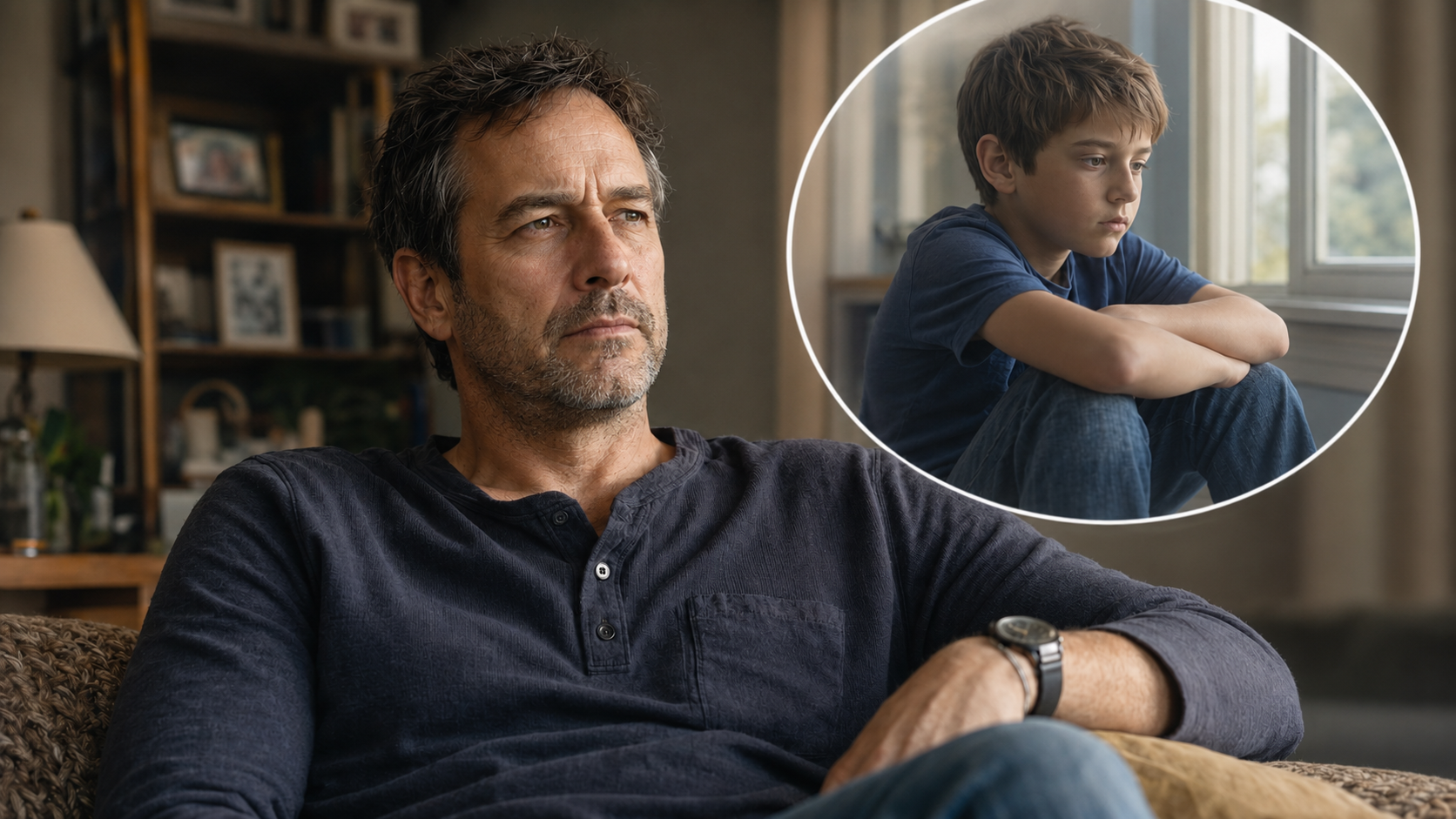
Healing the Mother Wound
For the man ready to understand the younger part driving secrecy, shame, escape, sexual coping, and the feeling that he can never get it right with a woman.
Get Him Healing The Mother Wound