You Can See the Wounded Boy Inside Your Man Long Before He Can
He may look capable, successful, and completely grown everywhere else in his life. Then something happens between you and suddenly you are dealing with silence, shame, defensiveness, anger, helplessness, or a man who seems to disappear right in front of you.
“I can see that something from his childhood is controlling him. He thinks his childhood was fine. How do I get him to see what this is doing to our relationship?”
You love the adult man standing in front of you.
Yet sometimes you find yourself arguing with a much younger version of him.
A simple request feels like criticism. Your disappointment sends him into shame, defensiveness, anger, silence, or escape. He agrees to change so the tension will end, then the same pattern returns.
He needs your approval, then resents how much power your approval has over him. He wants closeness, yet vulnerability makes him feel exposed and weak.
He may call it stress, personality, independence, or “just how men are.”
Very often, you are watching the effects of a mother wound.
A mother wound can hide inside a good man
A man’s mother wound comes from what his nervous system learned during his earliest relationship with a woman.
His mother may have loved him deeply and still been anxious, controlling, critical, emotionally absent, unpredictable, overprotective, intrusive, helpless, or dependent on him.
He may have learned that love required him to keep women happy, hide anything that could disappoint them, become useful instead of vulnerable, earn approval through achievement, or take responsibility for a woman’s feelings.
Maybe he learned to swallow anger until it exploded. Maybe he abandoned his own needs to keep the peace. Maybe he protected his mother from the truth about his experience and turned his own pain into shame.
“Love means taking care of her feelings, hiding the parts of me she may reject, and finding some private place to escape when it all becomes too much.”
Those lessons followed him into adulthood.
Now they live inside your relationship.
What the mother wound can look like in your man
Every request feels personal
He hears criticism inside ordinary needs. He defends himself, explains, attacks your delivery, or shuts down before he fully understands what you are saying.
He agrees, then quietly resists
He says yes to end the pressure, delays the decision, waits for your direction, and eventually resents you for becoming the one who manages everything.
Your pain becomes his shame
Your hurt feels like proof that he is a bad man. He collapses, withdraws, gets angry, or needs you to comfort him while your original pain disappears from the conversation.
Closeness feels dangerous
He wants love and sexual connection, yet emotional exposure activates fear. He may retreat from sex, chase validation, or use sexual attention as proof that he is still wanted.
- Avoid decisions and then resent you for taking charge.
- Need constant reassurance that he is a good man.
- Feel responsible for everyone while feeling appreciated by nobody.
- Hide small mistakes because your disappointment feels dangerous.
- Keep the peace with his mother or family at your expense.
- Feel guilty whenever he sets a boundary with a woman.
- Choose passivity, procrastination, or helplessness when he fears failure.
- Work constantly because achievement feels safer than intimacy.
- Confuse being needed with being loved.
- Seek female approval while resenting his dependence on it.
- Become cold precisely when you need him emotionally.
- Expect you to regulate the feelings he never learned to hold himself.
You can feel the good man underneath all of this.
That is what makes it so painful.
You can see his love. You can see his potential. You can see how hard he tries. You can also see that effort alone keeps producing the same relationship.
Why he has such a hard time seeing it
A boy depends on his mother for love, safety, and survival.
When that relationship hurts, blaming himself feels safer than seeing the limits of the woman he depends on.
He grows up believing:
“I was too sensitive.”
“I was difficult.”
“She sacrificed everything for me.”
“She did the best she could.”
“My childhood was fine.”
“Other people had it worse.”
These beliefs protect his bond with his mother. They also protect the survival system he built around that bond.
Looking at the mother wound can feel like betraying her, attacking his childhood, or admitting weakness.
When his partner points it out during a painful argument, his nervous system often hears another woman telling him that he has failed.
His defenses rise before his adult mind gets a chance to listen.
You push harder because the pattern is hurting you. He pulls farther away because your urgency feels like danger.
Both of you become trapped inside the wound.
His mother wound belongs to him. The doorway often begins with you.
You cannot complete this work for him. You can help him reach the place where he becomes willing to look.
Timing matters. Delivery matters. The meaning underneath your words matters.
Bringing this up during a fight will usually sound like another accusation. Sending him a course with the energy of “Here is what is wrong with you” will activate the exact wound you want him to examine.
He needs to feel that you still see the man inside the pattern.
“I bought this because I love you and I believe in the man you are. I see some patterns that keep hurting both of us, and I think this may explain them in a way that feels useful. I want more closeness with you. I want more ease between us. I want us to understand what keeps taking over.”
Then give him room to choose his next step.
What the course helps him understand
Healing the Mother Wound helps him separate the adult man he wants to be from the boyhood survival system still reacting inside him.
- Recognize his automatic shame and defense responses.
- Stay present when you are hurt or disappointed.
- Understand why ordinary requests feel like personal attacks.
- Set healthy boundaries with his mother and other women.
- Take responsibility for his own emotional stability.
- Express his needs before resentment builds.
- Make decisions from self-respect instead of fear.
- Receive love without constantly proving his worth.
- Create emotional and sexual intimacy that feels safe and alive.
- Become the grounded adult man his relationship requires.
He begins healing when the adult man becomes curious about the boy who keeps taking over.
When you already know he will push it away
Sometimes a man needs a different doorway.
He may need to feel understood before he feels ready to examine himself. He may need the conversation connected to his goals, his pain, and the kind of man he wants to become.
This was part of my own journey with Graham.
I learned how to speak directly to the man underneath those defenses.
I learned how to tell the truth in language he could actually hear. I connected the conversation to what mattered to him: his freedom, his strength, his peace, our relationship, and the man he wanted to be.
I learned how to create enough emotional safety for him to become curious about the very thing he once resisted.
That is how I helped my man become willing to look at his wounds and do the work.
I teach that process in How To Talk To Men.
- Bring up painful subjects without triggering immediate shutdown.
- Speak to his strength instead of activating his shame.
- Help him understand your experience without turning the conversation into a trial.
- Ask for change in language that gives him something clear to act on.
- Hold your truth while keeping the doorway to connection open.
- Recognize when fear, shame, or boyhood conditioning has taken over.
- Invite him into growth while allowing his choice to remain his own.
You can also start the Couples Course without him
You can begin the Couples Course by yourself and let him come to it in his own time.
Play it where he can overhear it.
Most men expect relationship content to explain women accurately and reduce men to a list of things they need to fix. Then he hears this course describing relationship dynamics the way men actually experience them.
For many men, it is the first time they have heard someone explain their internal world with any accuracy.
He hears his intentions, his pressure, his confusion, his defenses, and the ways he experiences you put into words he recognizes.
That recognition gets his attention. He starts listening from the other room. Then he gets curious. Then he begins asking what you are watching.
You can start changing your side of the dynamic immediately. He can join when his curiosity becomes stronger than his resistance.
You already see the pattern
Your next step depends on his readiness.
He has some willingness
Give him Healing the Mother Wound and invite him to understand the younger part of himself that keeps taking over his adult life and relationship.
His defenses still run the conversation
Begin with How To Talk To Men and learn how I reached the man underneath Graham’s defenses without shrinking the truth.
He refuses relationship work
Start The Couples Course by yourself. Let him overhear the first relationship teaching that accurately represents how men understand the dynamic.
The relationship changes when the wounded boy stops controlling the conversation and the adult man finally gets a chance to lead.
Choose the doorway that fits his readiness
Start with the path that matches what is actually happening now: work from your side, send him the relationship skills when he is ready, or help him go directly to the wound underneath the pattern.

Inviting Him In
If you can see the wounded boy underneath his defenses but he still cannot, Jenn shows you how to stop pushing against the wall and begin reaching the adult man underneath it.
Show Me How Jenn Did It
Become Her Safe Space
If he is already asking questions and wants to become safer for you, Graham shows him how to stay grounded, understand his defensiveness, and remain present when your emotions activate the younger part of him.
Send Him To Become Her Safe Space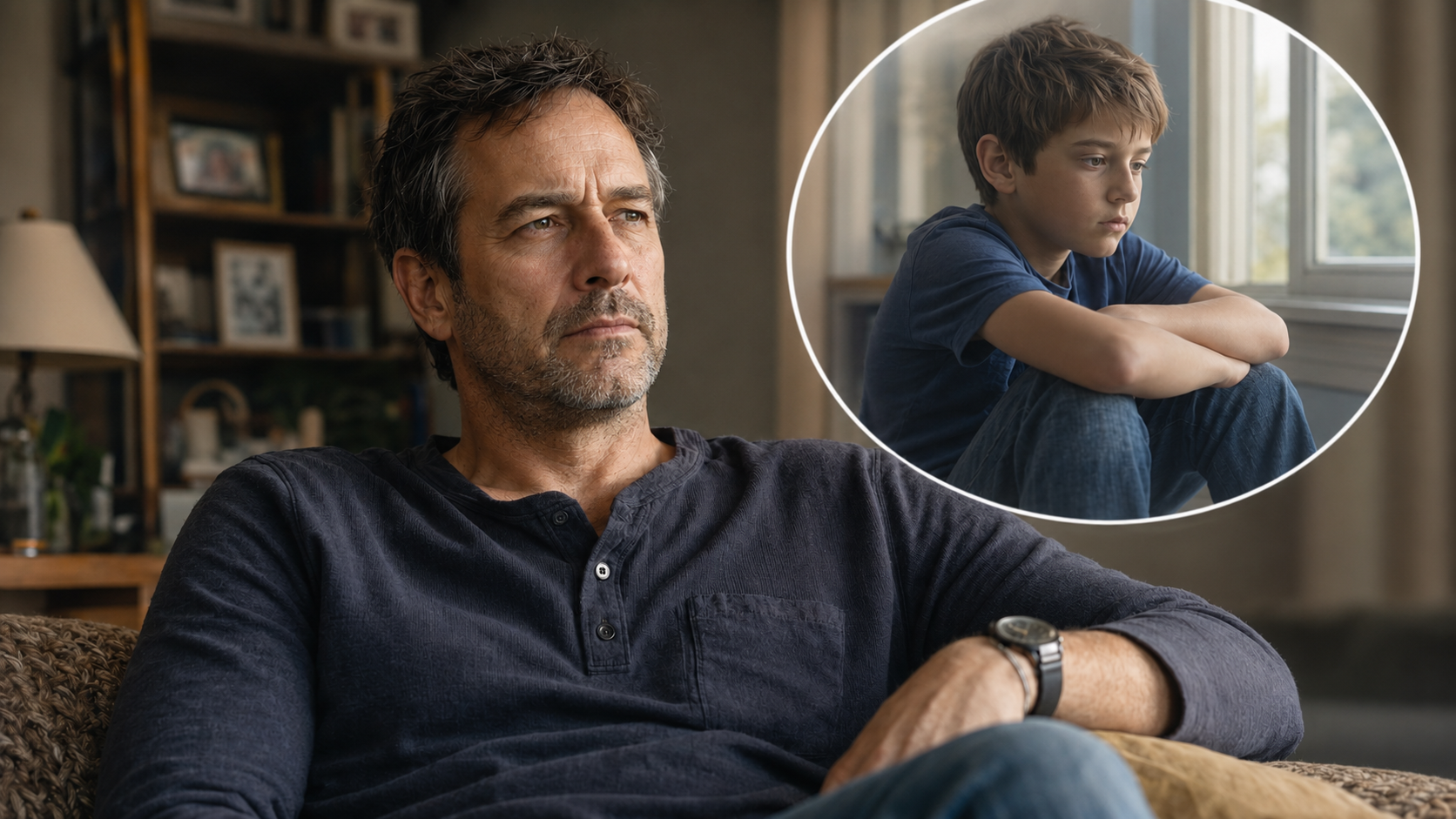
Healing the Mother Wound
For the man ready to understand why the younger part of him keeps taking over, release the shame underneath his reactions, regulate his nervous system, and become the grounded adult man his relationship requires.
Get Healing the Mother Wound for Him